


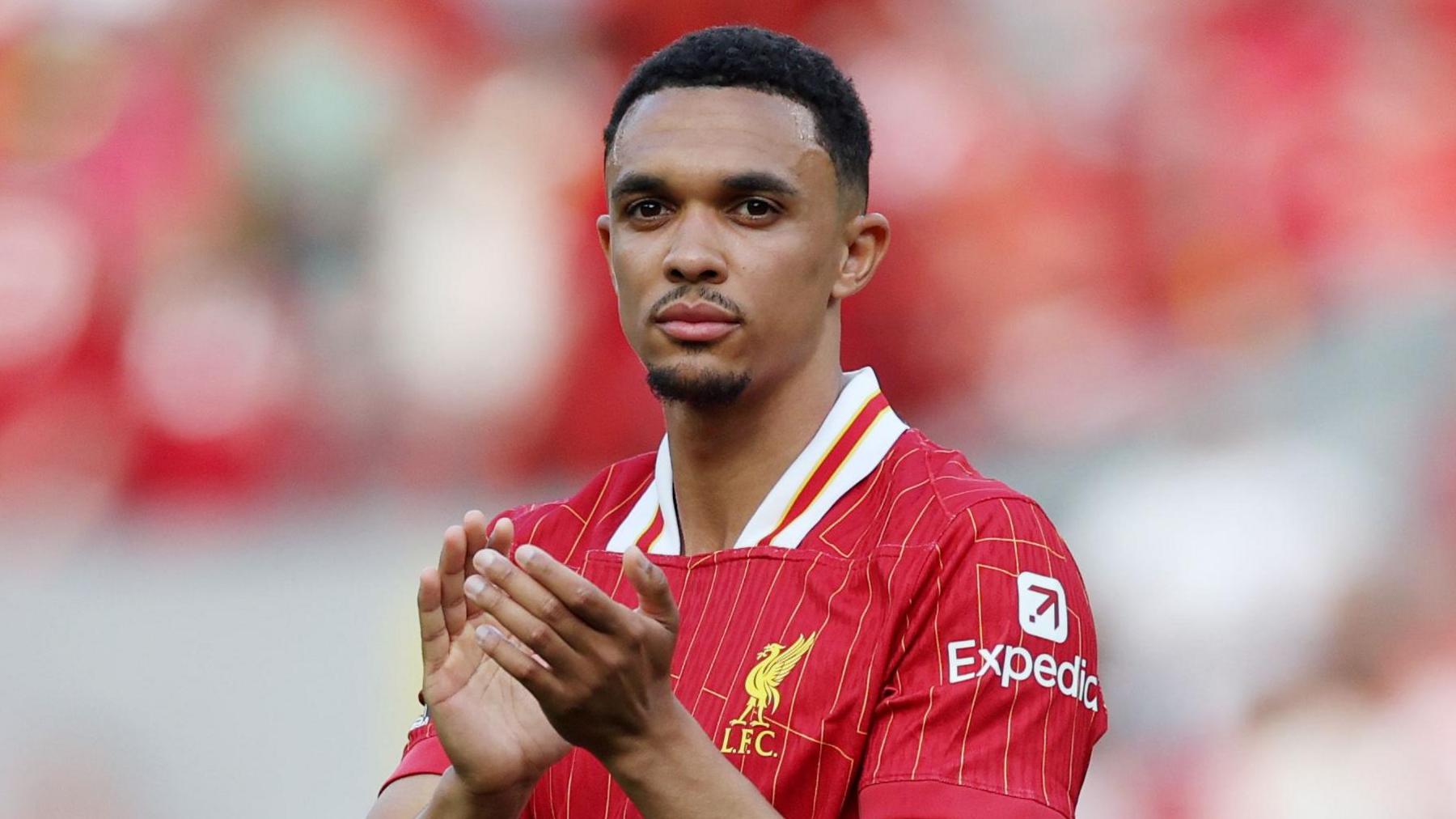
Liverpool’s recent struggles, while often framed around specific match results or individual defensive errors, are symptomatic of a much deeper, systemic problem: the absence of Trent Alexander-Arnold.
The departure of the vice-captain this past summer stripped the squad not merely of a starting right-back, but of its unique creative conductor, forcing Arne Slot’s new system into a state of tactical imbalance and unpredictability.
The Loss of the Deep-Lying Playmaker
Alexander-Arnold’s most irreplaceable quality was his role as the team’s deep-lying playmaker. He possessed a passing range and vision seldom seen in his position, effectively operating as a central midfielder from the right flank.
He was the “Lost Conductor” (Source 2.1), the player who dictated the team’s rhythm and switched the point of attack in a single, accurate 40-yard pass. This capacity for instant, line-breaking vertical and diagonal balls fundamentally unlocked defenses and provided Liverpool with a build-up phase that bypassed typical midfield congestion.
Without him, the ball progression is slower, safer, and more predictable, allowing opposing teams to regroup defensively and apply high pressure more effectively.
The Decoupling of the Salah Partnership
The relationship between Alexander-Arnold and Mohamed Salah was the lifeblood of Liverpool’s attack for years. It was an offensive automatism, where Trent’s passing and ability to draw defenders centrally created the isolated, one-v-one situations where Salah thrives.
The data this season reflects the breakdown of this chemistry; Salah’s touches in the opposition penalty area have reportedly dropped significantly (Source 3.1). The lack of that telepathic understanding and the unique quality of service has dulled the edge of Liverpool’s most consistent goal threat.
Replacing TAA with a more traditional full-back, like Jeremie Frimpong, requires a total re-wiring of the entire right-sided attacking structure, which is a process the team is clearly still struggling to execute.
The Systemic Imbalance in Build-Up
Tactically, Alexander-Arnold’s famous inverted role was crucial to maintaining balance in the midfield. When Liverpool attacked, he would often drift centrally, creating a temporary double-pivot alongside a defensive midfielder.
This inverted positioning gave Liverpool numerical superiority in the middle of the park, helping them dominate possession and control counter-press situations. New full-backs are, understandably, less comfortable performing this hybrid, ball-dominant role, which has left the centre-backs more isolated and the midfield trio exposed.
The system built around maximizing Trent’s gifts while masking his defensive frailties is gone, and the search for a new, stable tactical identity remains Arne Slot’s greatest challenge.
Replacing a sui generis player, one of a kind, was always going to require more than a single like-for-like signing; it demands a tactical overhaul.
Until Slot can find new mechanisms for progression and creativity, the team will continue to look disjointed and lack the control that defined their title-winning seasons.
NEWS NOW: