


By Kehinde Afolabi
As the festive lights twinkle over North London this December 26, 2025, the mood at the Emirates Stadium is a complex blend of title-race intensity and looming transfer questions.
While Arsenal sits comfortably in the upper echelons of the Premier League, the opening of the January window is less than a week away.
For Mikel Arteta and Sporting Director Andrea Berta, the agenda isn’t just about who might arrive, but how to handle a squad where elite talent is beginning to outgrow the bench.
The Crown Jewels: Nwaneri and Lewis-Skelly
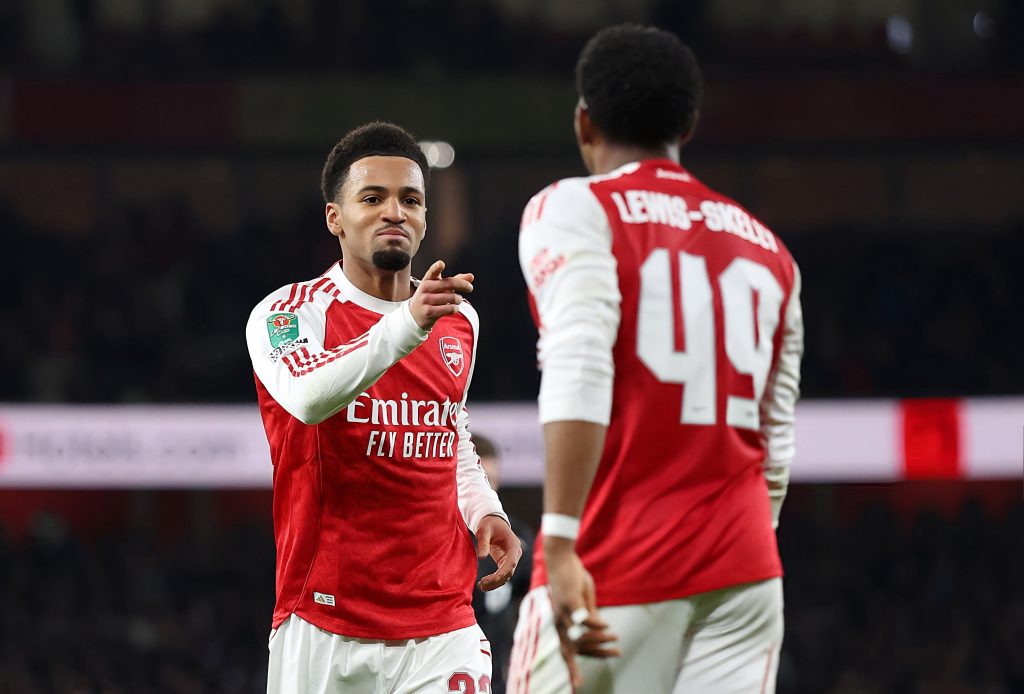
The primary focus for the Arsenal faithful remains the “Hale End” duo of Ethan Nwaneri and Myles Lewis-Skelly. Having both signed lucrative, long-term contracts this past summer, their futures appeared set in stone.
However, the reality of a title-chase environment means that Premier League starts have been frustratingly rare for the teenagers.
Nwaneri, now 18, is widely regarded as the most gifted playmaker of his generation.
Despite flashes of brilliance in the Carabao Cup earlier this season, including a goal against Brighton in the early rounds, he has found his path blocked by a fully fit Martin Ødegaard and Eberechi Eze.
Similarly, Lewis-Skelly’s versatility has made him a favorite of Arteta and was heavily involved with the team last season, but the form of Riccardo Calafiori and with the defensive unit performing at a historic level, minutes are hard to come by.
Naturally, this has put every “Project” club in Europe on high alert. Previously, Ethan has been linked with moves to top Premier League clubs like Chelsea and the Manchester clubs, but he went ahead to sign new Arsenal contract.
Arsenal is understandably reluctant to lose either; they represent the soul of the academy. Yet, the club faces a classic catch-22: they must provide a pathway to the pitch, or risk the players’ development stalling under the weight of expectation.
The Gabriel Jesus Conundrum
While the youth represent the future, Gabriel Jesus represents a more immediate crossroads. Having recently celebrated his 100th appearance for the club, Jesus remains a beloved figure for his work rate and leadership.
However, the injury updates provided by Arteta this week highlight a player who is only just returning to “fatigue mode” management after another knee setback.
With Arsenal’s frontline evolving into a more clinical, physical unit, Jesus has been linked with a potential move back to Brazil or a high-profile switch to the Saudi Pro League.
At 28, Jesus is too good to be a secondary option, yet the consistency of Kai Havertz, who Arteta expects back in “days, not weeks”, will limited the Brazilian’s role to that of a luxury utility man.
There is also the presence of Viktor Gyokeres, who is yet to really hit the form that made him highly sorted in the summer, and Mikel Merino has become an option as well.
If a significant bid arrives in January, the Gunners may have to decide if his experience outweighs the benefit of balancing the books.
The Returning Guard: Nelson and Vieira
Adding to the complexity are Reiss Nelson and Fabio Vieira, both of whom are set to return from their respective loan spells in the summer.
Nelson hasn’t enjoy a productive stint away at Brentford due to injuries and stiff competitions, and continues to struggle to prove he can be a starting winger in a top-five league, while Vieira is slowly rediscovering his creative spark at Hamburger.
Their return creates a “traffic jam” in the squad. Arteta’s philosophy has always leaned toward a thin, high-quality squad rather than a bloated one.
If Nwaneri and Lewis-Skelly are to get the minutes they deserve, and if the club wants to maintain harmony, the sales of Nelson or Vieira might be necessary to clear the deck.
A Balancing Act
The narrative for Arsenal in 2026 is no longer about “the process”—it is about the “product.” To stay at the summit of English football, Arteta needs a squad that is both deep and satisfied.
Losing Nwaneri or Lewis-Skelly would be a PR disaster and a tactical blow, but keeping them on the bench could be equally damaging to their long-term value.
As we approach the New Year, the Arsenal board must decide: do they trust the kids enough to start them in the high-pressure run-in, or do they risk the vultures circling Hale End?
One thing is certain: the January window will be a defining moment for the “New Arsenal” era.
NEWS NOW: