


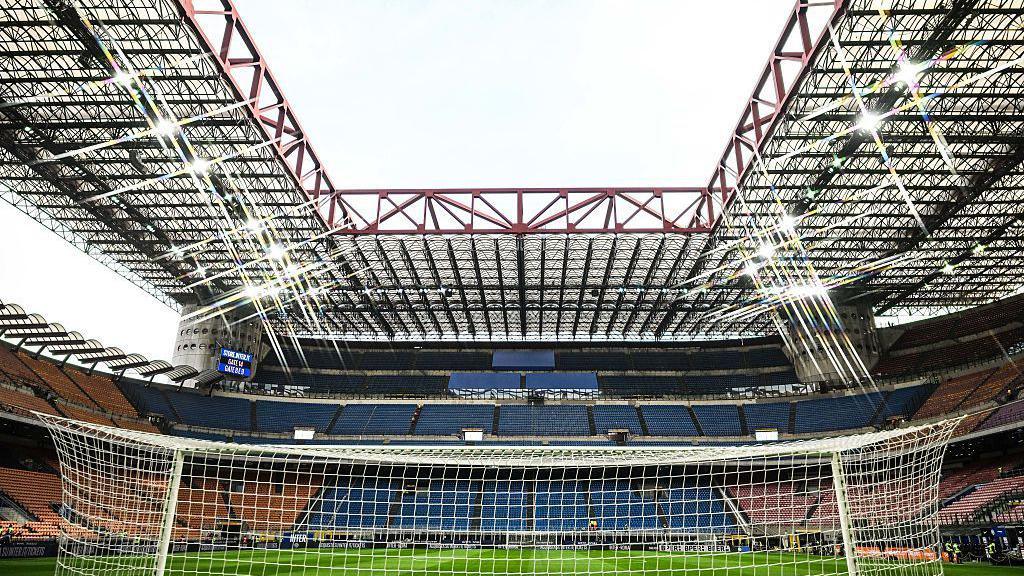
AC Milan and Inter Milan will demolish the iconic San Siro stadium and build a new 71,500-capacity arena, a move aimed at financial recovery and future success.
The potential demolition of the iconic San Siro stadium in Milan, a site lauded as a “football cathedral” steeped in history, has ignited an emotional debate among fans and players as the city’s clubs seek to modernise.
Il Duomo might be Milan’s most popular tourist attraction but San Siro is a football cathedral in its own right, steeped in a century of history having played host to some of the most celebrated players of all-time. Previous reports of its demise have been met with “anguish” from supporters worldwide.
Football legend Andriy Shevchenko, a Ballon d’Or winner during his seven years at Milan, acknowledged the stadium’s unique status but supported the move.
“Playing at San Siro is full of challenge, emotion and history,” he said. “I love San Siro. The fans make the stadium so special. But I think this is a very important step for the future of Milan and Italian football.”
The push for a new arena is driven by a stark comparison with Europe’s top leagues. According to data from PwC, Italy has undertaken only nine football stadium infrastructure or renovation projects in the past decade, compared to 24 in the Premier League, contributing to outdated facilities, including “toilets that have become dilapidated.”
Italy’s average matchday attendance rates have consequently dwindled to 81%, significantly lower than the Premier League’s 97%.
The proposed new project, estimated to cost around €1.5bn (£1.3bn), is designed to generate revenue beyond the traditional 90 minutes.
Club estimations suggest roughly one in seven tickets will be dedicated to corporate hospitality. Expert Kieran Plumley highlighted the necessity of diversifying the venue’s use.
“Building a new stadium is about what they can do with that stadium outside of the traditional match day – partnership deals with other sports, putting on concerts, turning the stadium into a 365-day-a-year venue,” Plumley stated, concluding: “Of course San Siro is iconic but for these two clubs, change simply has to happen.”
For Shevchenko, the key to preserving the history lies in the new design. “The design is going to be very important because if you respect the tradition and legacy of San Siro and the legends who played there to the maximum, you’re not going to lose it. You can do something really positive because nothing lasts forever,” he noted.