


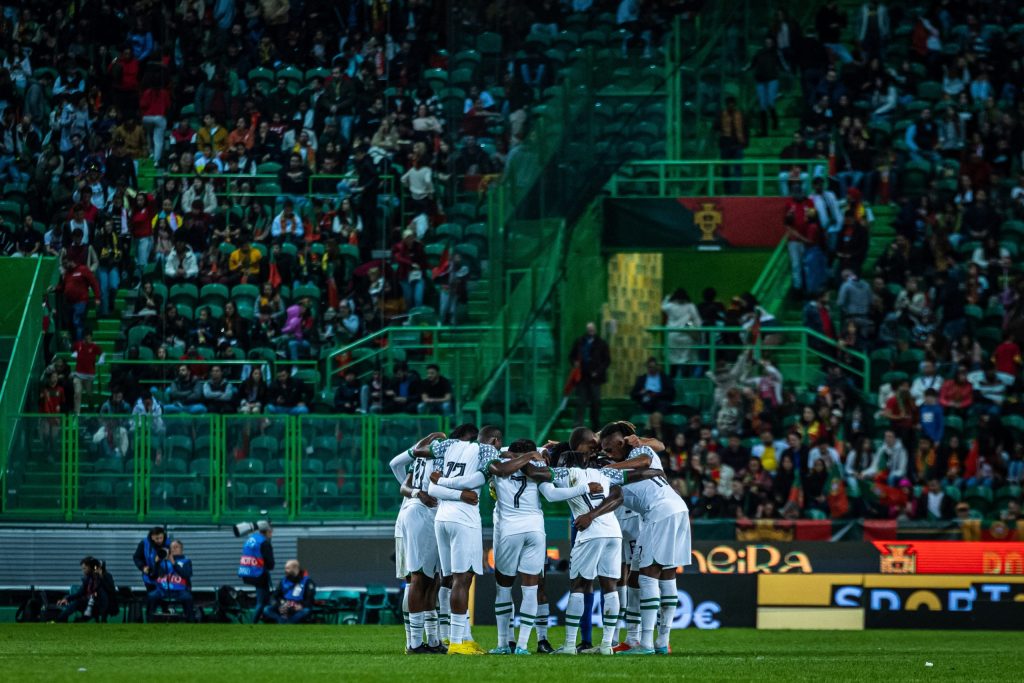
The Super Eagles don’t suffer from a shortage of talent, but represent a country unwilling to admit that greatness is not a birthright.
For more than four decades, Nigeria has lived inside a carefully constructed narrative of greatness. In the years that followed the civil war, successive governments turned to soft propaganda in an attempt to rebuild national confidence.
Slogans such as “Giant of Africa, Africa’s most populous nation, and Good People, Great Nation were promoted as unquestionable truths. These phrases created a symbolic identity that was easy to recite but difficult to verify. What was meant to serve as balm for a wounded nation became the foundation for a culture of exaggeration that still shapes national self-perception.
Many of the children who absorbed these slogans in the 1970s, 1980s and 1990s are adults today. Yet the myth survives with remarkable intensity. Its clearest expression appears during football crises.
A failed attempt to qualify for the World Cup is met with familiar outrage. Nigerians ask how the country could possibly lose to DR Congo.
The surprise is revealing. It suggests a refusal to reckon with the possibility that the country’s footballing status is not what the national imagination insists it is.
The belief that Nigeria is too big or too talented to lose to any particular African team reveals a deeper problem. It shows how a society that struggles with electricity, infrastructure, education, sports administration and basic governance still finds comfort in inflated fantasies of superiority.
The football pitch becomes a stage on which national delusions play out. The result is an unearned confidence that masks years of institutional neglect.
READ MORE FROM AFRICA IS A COUNTRY